Over 60% of data breaches involve a human element, yet most people still picture a lone figure in a dark hoodie when they hear the word “hacker.” The reality is far more nuanced, and understanding it could make a real difference to your personal and professional security.
Hacking is the act of creatively exploiting weaknesses in computer systems, networks, or software to gain unauthorized access, often with intentions ranging from ethical improvements to outright criminal theft. The word itself carries a surprising amount of history, and not all hackers are villains.
This distinction matters more than ever. When a company’s customer database gets exposed, when a government’s infrastructure goes offline, or when your own email account gets compromised, a hacker is almost always involved. Knowing who they are and what drives them helps you understand the threats you face and the defenses available to you. According to AVG’s overview of hacker types, the motivations and methods vary dramatically depending on the category.
In this guide, you’ll learn what hacking actually means, meet the five core types of hackers, see how they compare side by side, and walk away with practical tips to protect yourself from each one.
Table of Contents
- What is Hacking?
- The 5 Essential Types of Hackers
- White Hat vs. Black Hat vs. Others: Quick Comparison
- Why It Matters: Real Impacts and Examples
- How to Protect Yourself from Each Type
- Key Takeaways
- Frequently Asked Questions
What is Hacking?
Hacking means finding and exploiting weaknesses in a computer system, network, or piece of software. Think of it like picking a lock: the skill itself is neutral. Whether you’re a locksmith helping someone back into their home or a burglar breaking in uninvited determines whether the act is helpful or harmful.
The Surprising Origin of “Hacker”
The term “hacker” didn’t start out as something sinister. According to Wikipedia’s history of the hacker, it originated at MIT in the 1950s and 1960s, where it described programmers who solved problems in clever, unconventional ways. These early hackers were admired for their ingenuity. The negative connotation only emerged decades later as personal computers and internet access became widespread, and some individuals began using those same creative skills to access systems without permission.
Hacking in Plain English
Today, hacking covers a broad spectrum of activities. At one end, security professionals use hacking techniques to find vulnerabilities before criminals do. At the other end, organized crime groups and government-backed teams use the same methods to steal data, disrupt services, or gather intelligence. What separates these groups isn’t the technical skill set; it’s intent and authorization. If you have permission, you’re a security tester. If you don’t, you’re breaking the law.
The 5 Essential Types of Hackers
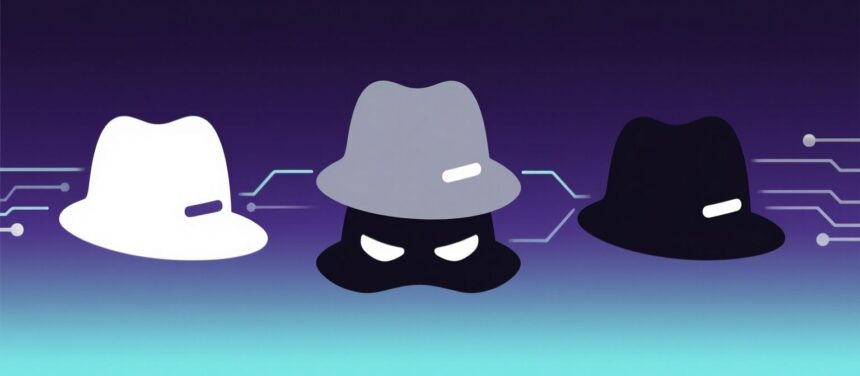
Not all hackers wear the same hat, and some don’t wear one at all. The cybersecurity community uses color-coded “hats” borrowed from old Western films, where heroes wore white and villains wore black, to categorize the five main types. Here’s what each one means.
White Hat, Black Hat, and Grey Hat Hackers
White hat hackers are the good guys. They’re cybersecurity professionals hired by organizations to find vulnerabilities before criminals can exploit them. Their work, often called penetration testing, is entirely legal because they operate under a formal contract. According to Kaspersky’s breakdown of hacker hat types, white hats follow strict ethical guidelines and report every vulnerability they find back to the organization.
Black hat hackers are the criminals. They break into systems without permission, driven by financial gain, revenge, ideology, or pure malice. Data theft, ransomware attacks, and identity fraud are their typical outputs. There’s no authorization involved, and the consequences, both legal and social, are severe.
Grey hat hackers sit in the middle. They access systems without permission, which technically makes them illegal, but their goal isn’t to cause harm. Grey hats often expose vulnerabilities publicly or contact the affected organization afterward, sometimes requesting a fee for the information. As Splunk explains in their hacking comparison guide, this puts them in a genuine legal grey zone: their intentions may be good, but their methods aren’t authorized.
Script Kiddies and State-Sponsored Hackers
Script kiddies are amateurs who use tools and attack scripts built by more skilled hackers without really understanding how they work. Think of a teenager launching an attack with a downloaded tool, similar to someone setting off fireworks without understanding combustion. According to GeeksforGeeks’ guide to hacker types, script kiddies often use tools like Metasploit to deface websites or crash services, motivated primarily by bragging rights rather than financial gain. They’re less technically sophisticated but can still cause real damage.
State-sponsored hackers are at the opposite end of the skill spectrum. Backed by national governments, these hackers operate with significant resources and specific political or strategic objectives. Their targets include foreign governments, critical infrastructure, military systems, and private corporations holding sensitive data. Espionage, sabotage, and intelligence gathering are their primary missions, as noted in AVG’s overview of hacker types.
White Hat vs. Black Hat vs. Others: Quick Comparison
Imagine hackers as characters in a film. Some are the heroes, some are the villains, and some fall somewhere uncomfortably in between. This table captures the core differences at a glance.
| Type | Intent | Legal? | Common Methods |
|---|---|---|---|
| White Hat | Improve security | Yes (with permission) | Penetration testing, vulnerability scanning |
| Black Hat | Personal gain or harm | No | Malware, phishing, data theft |
| Grey Hat | Expose flaws (unsolicited) | Mostly no | Unauthorized access, public disclosure |
| Script Kiddie | Fun, bragging | No | Pre-built tools, basic exploits |
| State-Sponsored | Espionage, disruption | Varies by nation | Advanced persistent threats, infrastructure attacks |
The single biggest differentiator across all five types is authorization. A white hat hacker running the same scan as a black hat hacker isn’t committing a crime, because they have written permission to do so. The technical action is identical; the legal and ethical context is completely different. This is a point Splunk’s hacking comparison makes clearly: permission is everything.
Why It Matters: Real Impacts and Examples
Understanding hacker types isn’t just trivia. Each category poses a distinct threat, and recognizing that distinction shapes how you respond.
Threats from Each Type
Black hat hackers are responsible for the data breaches that expose your banking credentials, health records, and passwords. State-sponsored hackers target infrastructure at a national scale, from power grids to election systems. Grey hats can inadvertently cause disruption even when trying to help, and script kiddies, despite limited skill, can overwhelm websites with simple denial-of-service tools.
White hats, by contrast, represent a genuine defense. Organizations that invest in ethical hacking programs find and fix vulnerabilities before criminals discover them, saving millions in potential breach costs.
Everyday Relevance
You don’t need to run a corporation to be a target. Script kiddies often attack indiscriminately, running automated tools against thousands of systems at once. Your home router, email account, or social media profile could be on that list. Knowing that these different types of hackers exist, and that they operate with different tools, motivations, and levels of sophistication, helps you make smarter decisions about your own security.
How to Protect Yourself from Each Type
You don’t need to become a hacker to defend against one. A few consistent habits eliminate most of the risk.
Quick Wins Against Common Threats
Use strong, unique passwords for every account. Password reuse is one of the most exploited vulnerabilities by both black hats and script kiddies. A password manager makes this manageable. Enable two-factor authentication (2FA) wherever possible; it adds a second verification step that stops most automated attacks cold. Keep your software and operating system updated: outdated software is riddled with known vulnerabilities, and patches exist specifically to close them. These steps, highlighted in Kaspersky’s guide to hacker types, are your strongest baseline defense. Changing default credentials on routers and smart devices is equally important since default usernames and passwords are publicly documented and widely exploited.
Basic Detection for Beginners
Install reputable antivirus software and keep it active. Enable your operating system’s built-in firewall. If you notice unusual account activity, unexpected logins, or performance issues on your device, treat it as a warning sign and investigate promptly. Understanding how vulnerabilities like SQL injection work, even at a high level, helps you appreciate why keeping software patched matters so much, as noted in GeeksforGeeks’ guide to hacker types.
Key Takeaways
- Hacking isn’t inherently criminal. The term originated at MIT to describe clever programmers; intent and authorization define whether it’s legal or not.
- Five types, five motivations: White hats protect, black hats steal, grey hats expose flaws without permission, script kiddies seek notoriety, and state-sponsored hackers pursue strategic goals.
- Authorization is the dividing line. The same technical action is legal with permission and criminal without it.
- Script kiddies aren’t harmless. Limited skill doesn’t mean limited impact; automated tools scale their attacks easily.
- State-sponsored hackers are the most resourced and dangerous, targeting infrastructure and governments with advanced, long-running campaigns.
- Basic habits block most attacks: strong passwords, 2FA, software updates, and antivirus cover the majority of common threats.
Frequently Asked Questions
What are the 5 main types of hackers?
The five core types are white hat (ethical, authorized), black hat (malicious, unauthorized), grey hat (unauthorized but discloses vulnerabilities), script kiddies (amateurs using pre-built tools), and state-sponsored hackers (government-backed, strategic objectives). Each differs in intent, legality, and method.
What is the difference between white hat and black hat hackers?
White hat hackers work with an organization’s permission to find and fix security weaknesses; it’s a legitimate profession. Black hat hackers break into systems without authorization for personal gain, data theft, or deliberate harm. The technical skills often overlap; the permission and intent do not.
Are grey hat hackers legal?
Generally, no. Grey hats access systems without authorization, which violates computer crime laws in most countries, even if their intent is to help. Disclosing a vulnerability after the fact doesn’t retroactively make the unauthorized access legal. Some jurisdictions treat intent as a mitigating factor, but the legal risk remains real.
What motivates script kiddies?
Script kiddies are primarily motivated by attention, excitement, and the desire to impress peers, rather than financial gain or ideology. They use tools created by skilled hackers without deeply understanding them. The low barrier to entry means almost anyone can attempt an attack, which is part of what makes them a persistent nuisance.
How can I protect against hackers?
Start with the basics: use unique passwords for every account, enable two-factor authentication, keep all software updated, and install reputable antivirus software. These steps address the most common attack methods used by black hats and script kiddies alike. For stronger protection, review your account activity regularly and be cautious about phishing emails.
References
- Different Types of Hackers: White Hat, Black Hat, Gray Hat, and More
- Black hat, white hat & gray hat hackers
- Hacking 101: Black Hat vs. White Hat vs. Gray Hat Hacking
- Types of Hackers
- Hacker